Inspirations/Sustainability
Sustainability · 8 min read
Glass facades in Indian sun: what shading actually saves
A full-height window facing west is a heater you paid a premium for.
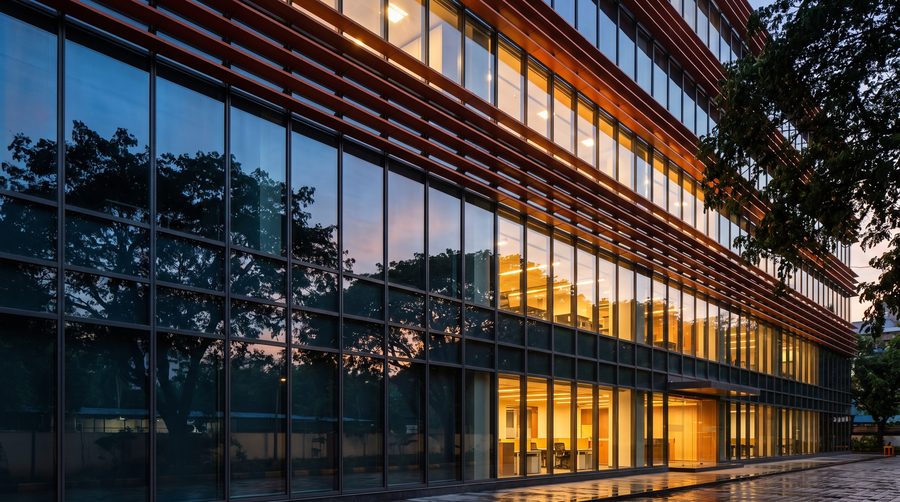
Large glazing is the defining move of contemporary Indian residential architecture, and it is frequently done without regard to orientation. The result is a room that is beautiful for two hours a day and unusable for four, with an air conditioner working to undo what the window is doing.
The number worth understanding is solar heat gain coefficient. Lower means less heat admitted. But the more effective intervention is almost always external — a fin, a deep reveal, a projecting slab, a pergola. Shading the glass from outside stops the heat before it enters; a blind on the inside is dealing with heat that is already in the room.
Orientation is free and decisive. North glazing gives you light with very little heat and can be as generous as you like. West is the difficult one and should be the smallest, most shaded opening in the house. South is manageable with a horizontal projection.
If the glazing is already in and facing the wrong way, external shading retrofits — fins, screens, planting — will do more than any film applied to the inside of the glass.
If the glazing is already in and facing the wrong way, external shading retrofits — fins, screens, planting — will do more than any film applied to the inside of the glass..