Inspirations/Process
Process · 7 min read
Home lifts: the questions to ask before the shaft is cast
Almost every regret about a home lift is a decision made after the structure was poured.
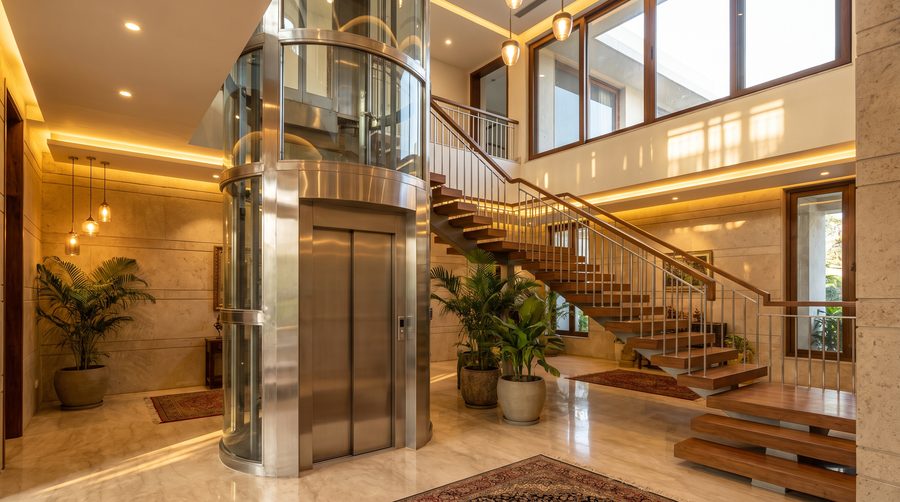
A home lift is one of the few interior decisions with a hard structural deadline. Pit depth, headroom, shaft dimensions and the machine room question all have to be settled before the slab is cast, and retrofitting is an order of magnitude more expensive than planning.
The pit is where most projects come unstuck. Traditional systems want 1,000 to 1,200mm below finished floor, which becomes a problem on a site with a high water table or a raft foundation. Pitless and low-pit systems exist and cost more; knowing which you need is a first-week decision, not a last-month one.
Size for a wheelchair even if nobody in the household uses one. A cabin that takes a wheelchair also takes a stretcher, a mattress and a large appliance, and the incremental cost at design stage is small. The reason people install a home lift in the first place is usually a change in circumstances, and circumstances keep changing.
Ask about power failure behaviour, and about the annual maintenance contract, in the same conversation as the purchase price. A lift with no service presence in your city is a device that will eventually be stuck.
Ask about power failure behaviour, and about the annual maintenance contract, in the same conversation as the purchase price.