Inspirations/Process
Process · 8 min read
Wiring: the load calculation nobody does until the geyser trips
Homes are drawing far more power than the wiring conventions assume.
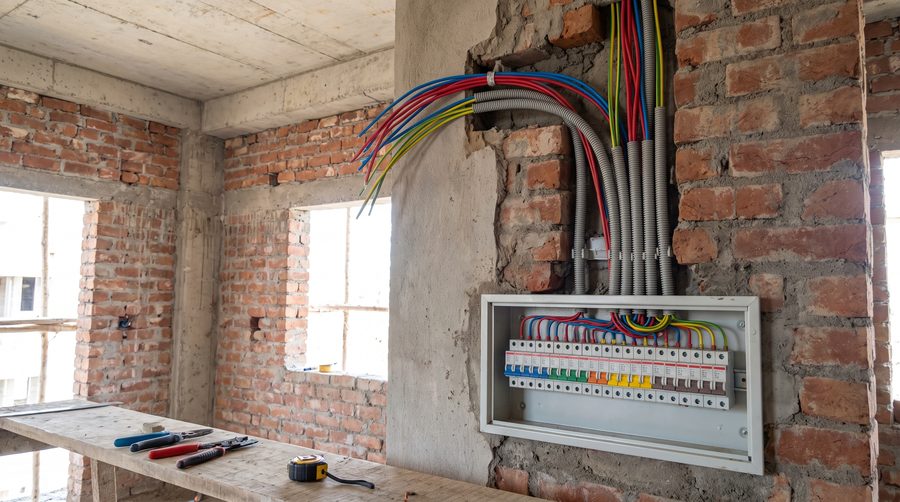
The wiring conventions most Indian electricians work to were settled when a household ran fans, lights, a fridge and a television. A modern flat adds several air conditioners, a geyser or two, an induction hob, a dishwasher, a microwave and an electric vehicle in the parking. The old assumptions no longer hold, and the symptom is a breaker that trips on winter evenings.
Do the arithmetic before first fix. Add the connected load, apply a sensible diversity factor, and size the incoming supply and the distribution board accordingly. It is an hour of work that prevents a decade of irritation, and it is far cheaper than upgrading later.
Dedicated circuits for heavy appliances are not optional. Every air conditioner, every geyser, the hob and the EV charger should each be on their own breaker of the right rating. Sharing them is how a kitchen ends up dark whenever the microwave and the toaster run together.
Provide for the car now even if there is no car yet. A conduit and a spare way in the board, run while the walls are open, costs very little. Retrofitting a charger circuit through a finished building is a different order of expense entirely.
The wiring conventions most Indian electricians work to were settled when a household ran fans, lights, a fridge and a television.